Project Bread’s Community Power Fund Empowers Grassroots Leaders to Make Hunger History
Olivia Deng
When Stacey Borden, Founder and Executive Director of New Beginnings Reentry Services, Inc. (NBRS), tells Chef Niurka’s story, she lights up. Niurka refused to let her conviction dictate her future. With courage and determination, she transformed her life, enrolling in the New England Culinary Arts Training (NECA) program, later joining their staff, and even completing a business entrepreneurship course at Boston College.
Her journey came full circle when she created her own line of seasonings, a symbol of flavor, freedom, and newfound purpose. With access to training, mentorship, and community support, Niurka was able to build on her skills. “It was phenomenal,” Borden said. “She developed her own seasoning, which said, wow, we could have a formerly incarcerated woman have some passion and find her leadership, find her niche in the world."
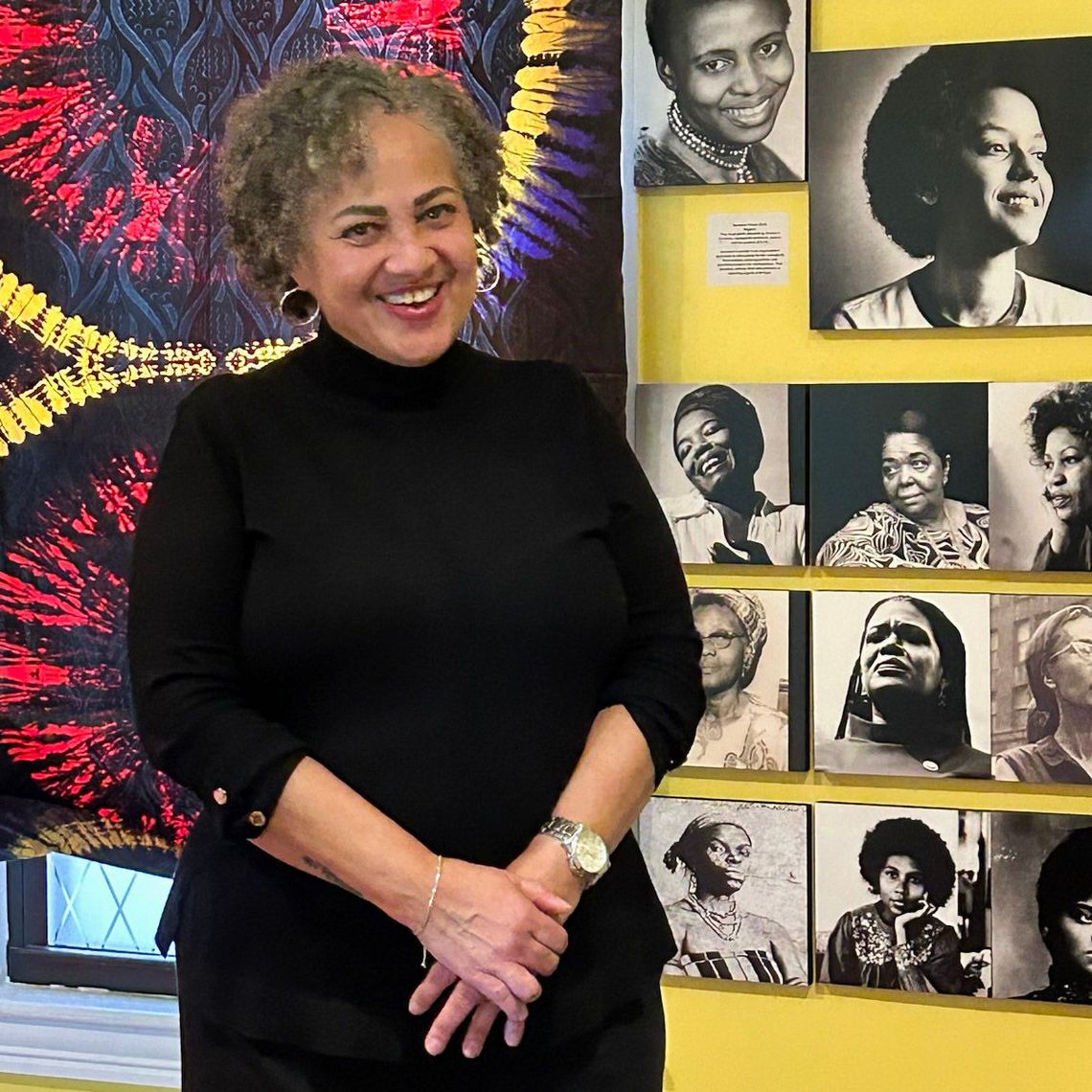
Niurka asked Stacey about teaching culinary at NBRS. They signed a contract, and now she’s helping formerly incarcerated folks learn cooking skills. “[It] is incredible that someone in the last two years can enlighten themselves and be that passionate about food and help formerly incarcerated people learn not only employment for career development, but understand culturally how food and seasoning, just how to cut food and develop seasoning.”
Borden is a formerly incarcerated woman herself who was inspired to start NBRS due to the injustices she experienced with herself, her community, and her family. And now, thanks to Project Bread’s Community Power Grant, she’s partnering with Roslindale Food Collective to lead an innovative, community-driven initiative that links food justice with reentry support and rebuilding of community strength.
Across Massachusetts, local leaders are redefining what food justice means. From training Arabic-speaking immigrants in Revere to empowering seniors as advocates in MetroWest, five organizations are spearheading the fight against hunger through Project Bread’s Community Power Fund, part of the Make Hunger History initiative.
The inaugural Community Power Grants invest a total of $97,000 in grassroots organizations that tackle the root causes of food insecurity, rather than just its symptoms. Each grantee is working to shift power directly into the hands of those most affected by hunger.
"Food insecurity is not just about food — it is about deep structural disparities," says Adriana Mendes-Sheldon, Director of Community Partnerships at Project Bread. "True transformation happens when power is redistributed and communities most impacted by food insecurity are part of shaping the solutions. By investing in grassroots leadership and advocacy, we build long-term capacity for organizing and a sustainable impact that goes beyond charity and toward systemic change."
Project Bread’s mission is to build a movement to permanently end hunger in Massachusetts. In order to do this, we know that we need to bring together a diverse coalition of advocates, policymakers, businesses, individuals with lived expertise, and community members to collaborate, advocate to mobilize our communities toward ending hunger for everyone in our state — forever,” said Spencer Masterson, Director of Make Hunger History at Project Bread. “The Community Power Grant ensures that grantees’ community leadership, lived experience, and organizing efforts are directly connected to this statewide movement.
Adriana explains that when investing directly in organizations rooted in lived experience and local organizing, Project Bread not only supports effective community-driven solutions but also builds the capacity of frontline leaders to shape policy, mobilize their neighbors, and lead lasting systemic change. “This is how we make hunger history — meaningful engagement by working together and fueling community power from the ground up.”
“This is how we make hunger history — meaningful engagement by working together and fueling community power from the ground up.” - Adriana Mendes-Sheldon, Director of Community Partnerships at Project Bread
Meet the Community Power Fund Grantees
MetroWest Food Collaborative: Empowering Senior Advocates
For Kali Coughlan, coordinator of the MetroWest Food Collaborative, the fight against hunger begins with those who have experienced it firsthand. With two decades of experience in nonprofit and municipal work, Coughlan said her passion for food justice began when she joined the Worcester County Food Bank.
“I think really [that’s when] I found my passion… for food insecurity and just ensuring that folks have access to the food that they need,” she said. “I just feel like it's a human right that everybody should have access to the food that they need.”

Working on child nutrition programs, she saw both the power and limits of emergency food systems. “Food banking isn't gonna get us out of people being hungry,” she explained. “It really needs to be more driven on policies.” That realization led her to launch the MetroWest Food Collaborative in 2021, bringing together partners across the region to strengthen the local food system and advocate for long-term change.
The collaborative’s mission, crafted word by word by a 15-member steering committee, centers on equity. “Our mission is to actively join with the community to strengthen the local food system by advocating for policies and programs that support equitable access to nourishing, affordable, and culturally appropriate food,” Coughlan said.
With its Community Power Fund grant, the collaborative is channeling that mission into a new advocacy initiative for seniors. The program will train a cohort of older adults who have experienced food insecurity to share their stories with legislators and engage in local advocacy.
“We have been wanting to get more community members and residents involved in the advocacy work that we do,” she said. “We specifically… have a large senior population that's experienced food insecurity… and we want to try and continue to build those relationships, to build more trust with older adults.”
Through advocacy training and ongoing mentorship, the collaborative hopes to transform participants’ lived experiences into policy recommendations that reflect real community needs. “We’re really hoping to build power for older adults to help them to become ones that are making policy recommendations and doing more advocacy within their communities,” she said.
For Coughlan, success is about seeing participants continue to speak out long after. “I would know that it was successful if we've had older adults engage with us, participate in the advocacy trainings, and [be] wanting to continue in this type of work,” she said.
Boston Food Access Council: Strengthening Grassroots Leadership
The Boston Food Access Council (BFAC) is working to ensure that the people most affected by hunger help shape the solutions. Steering committee member Seana Weaver, who has spent years in food justice roles, said the coalition’s goal is to bring residents, advocates, and policymakers into the same conversation.
“We are a community-led coalition,” she said. “We work to empower Bostonians with the knowledge to [access] food access resources, and to bring together and amplify community voices, needs through collaboration, partnership, advocacy, and awareness building.”
BFAC’s strength, Weaver said, lies in its deep connections with city leaders and residents alike. “We have connections with city council members, the Office of Food Justice, and other policymakers and legislators,” she explained. “We contact them and make sure that they're up to date on what the coalition is looking for and what the conversation is… in order to support advocacy work.”
With support from the Community Power Fund, BFAC is taking two major steps forward: bringing in professional leadership and developing a paid network of community advocates. The organization is using the grant funding for two main purposes. First, they plan to hire a part-time executive-level leader, referred to as a fractional executive director. Second, a portion of the funds will support community outreach efforts, including promoting SNAP benefits and improving access to food resources.
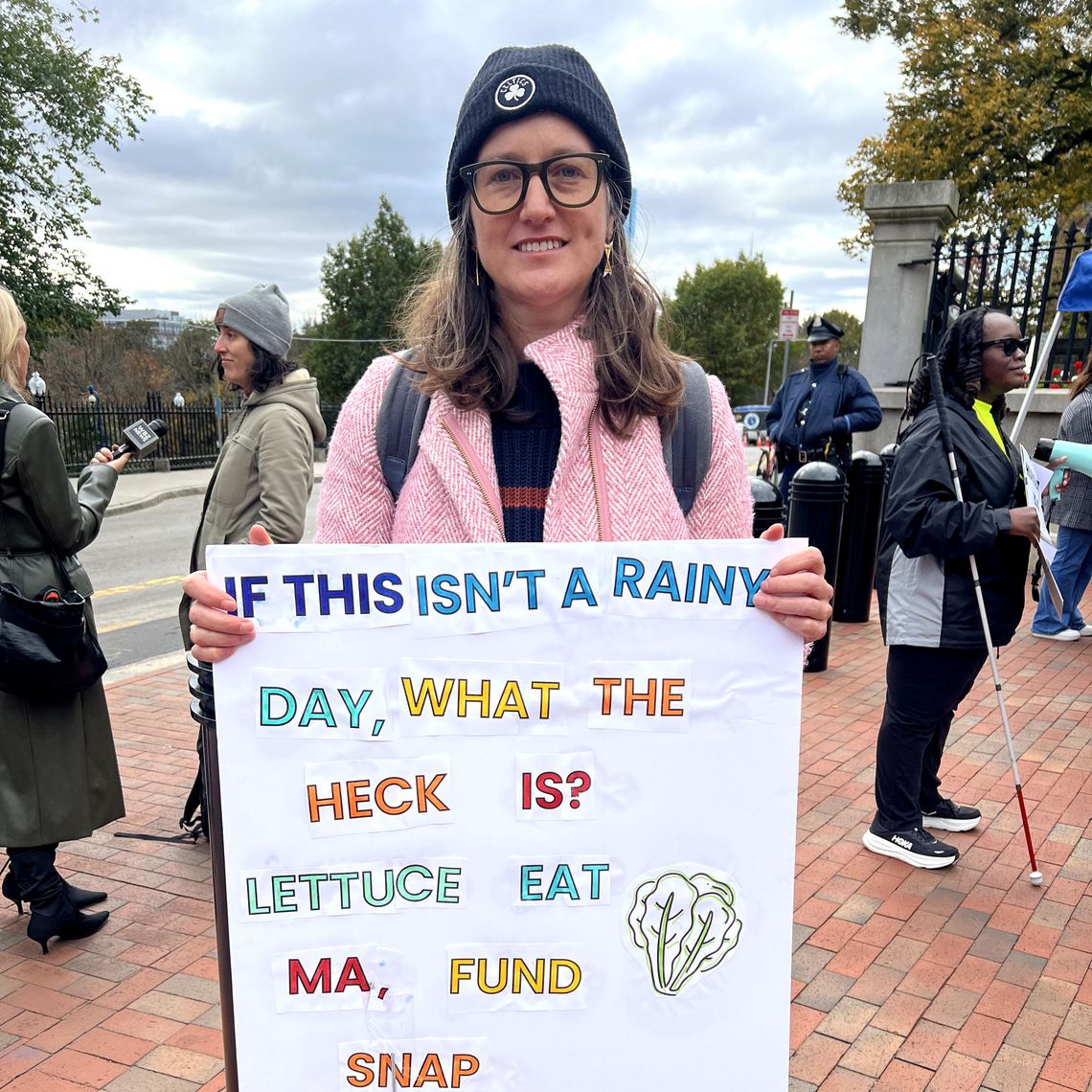
These advocates, she added, will be trained and compensated for sharing vital information about benefits programs, such as SNAP and HIP, at farmers' markets, community events, and other food access points. “That would be people who are directly in the community being paid dollars to do their work and to be trained to do outreach,” Weaver said.
She emphasized that the advocates will bring critical lived expertise. “We’re looking for people who have experience with or are currently experiencing food insecurity, people who have a story to tell and want to tell that story,” she said.
Ultimately, Weaver hopes the program will strengthen Boston’s food justice network while amplifying residents’ voices. “What I really hope is for both the steering committee members of the coalition and people who are witnesses… to get to witness work that is actively moving the needle on food justice and food access in Boston,” she said.
Roslindale Food Collective & New Beginnings Reentry Services: Healing and Advocacy Through Food
When Leah Arteaga, founder of the Roslindale Food Collective, first began rescuing food from a Whole Foods in Beverly, she had no idea she was building the foundation for a movement. She started small, setting rescued groceries on her picnic table and inviting neighbors to take what they needed.
“I would go every Saturday to pick up the food at Beverly Whole Foods and bring it back and put it on my picnic table,” she recalls. “I would invite people from the community to come and get it. And I was like, okay, 20 people are getting food. That’s cool.”
From that simple act, a grassroots network began to grow. When a neighbor offered to help, Arteaga turned the effort into a fully fledged volunteer program, organizing weekly distributions and coordinating with local donors. “We then started to bring in more food and more food,” she said. “And during the pandemic, we were making upwards of 160 boxes. We had primarily immigrants coming to our program that was operating out of a parking lot in the back of a middle school.”
Her own experience of suddenly facing food insecurity as a single mother deepened her empathy and her resolve. “I got turned away at a food pantry ’cause I was missing one of my kids’ social security cards,” she recalls. “Here I am, like this educated woman who feels like I have dignity, and now I’m stripped of that dignity because I can’t even get food because of a technicality.”
That moment crystallized what she wanted her organization to be: a place where everyone is welcomed and treated with respect. “To me, addressing food insecurity with dignity means that you are allowing people to come to your program without asking any invasive questions,” she said. “You don't ask how much they make, how many children they have, where they live. Their zip code has nothing to do with the fact that they need food.”

Now, through the Community Power Fund, Arteaga has joined forces with Borden to create a groundbreaking collaboration that connects food justice with support for reentry citizens.
“We have an adult reentry day center. We service all genders through the world of arts and healing, through psychodrama therapy, through counseling for drug abuse or alcoholism, through trauma. Bottom line is we service the whole self holistically,” Borden said.
When Arteaga approached Borden about applying for the Community Power Fund together, the partnership felt natural. “I fell in love the minute I met Stacey,” Arteaga said. “What we’re doing collaboratively between New Beginnings and Roslindale Food Collective is something that neither of us could have done on our own.”
Their project will host a six-part community series that blends storytelling, shared meals, and cultural celebration. The series will culminate in a Community Food Justice Manifesto, co-created with residents who have been impacted by incarceration and food insecurity. Each event will feature culturally significant meals, including Cape Verdean, Haitian, African, and American cuisine, prepared and shared by local chefs, many of whom are formerly incarcerated. NBRS aims to help people reimagine their relationship to food.
“What we are doing here is really giving them a surprise, an awakening, some love. People that have been in prison don't get nutritional food… you might not get to eat if you're talking in line. They have no fruit. What we are doing here is really giving them something different, a different taste, a different culture of what food can be.”
Stacey Borden, Founder and Executive Director of New Beginnings Reentry Services, Inc. (NBRS)
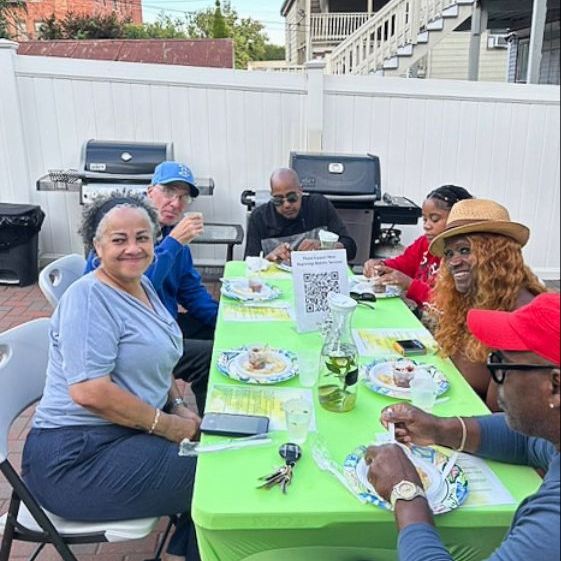
For Borden, this work centers on rebuilding identity and community after incarceration. “We’re creating a manifesto,” she said. “What we hope to get out of it is building a stronger community of leaders that know that they're loved and cared for and joyous freedom to be expressive.”
The partnership is also about community power. As Arteaga puts it: “It’s going from we and them to us, which is just a beautiful concept.”
Borden agrees. “If you think about the Last Supper and how they all came together at the table, that was community,” she said.
Hampshire County Food Policy Council: Organizing for Systems Change
In Western Massachusetts, the Hampshire County Food Policy Council (HCFPC) is proving that lasting food justice starts with community voice. Co-founder and Strategy & Network Coordinator Kia Aoki said the group began organizing at the height of the pandemic, when neighbors banded together to ensure no one went hungry. Transformational Operations Coordinator Kristen Whitmore joined the group in 2021, and the Hampshire County Food Policy Council officially launched in 2022.

“In the very beginning of the pandemic, we were all trying to figure out how we can help each other and make sure that we all have enough to eat in our community. And that kind of coincided with the beginning of the Hampshire County Food Policy Council,” Aoki said.
Whitmore said the Hampshire County Food Policy Council was established specifically as a resident-led initiative with the goal to build the power of community members to participate directly in affecting change in the food system. The council operates using a collective decision-making model called sociocracy. “We use a model called sociocracy, which has to do with the way that our organizational structure works as well as the way we make decisions,” Whitmore said. “We’ve done a lot of story collection… and we have a community story archive on our website.”
For Whitmore, who grew up in a family of farmers, food justice is deeply personal. “Realizing that people's access to food or access to land is not equitably distributed and that some people don't know where their food comes from or that it can be really hard for people to even access fresh food was a big signal to me that this is something we need to work on,” Whitmore said.
Aoki’s perspective comes from lived experience. "I began to understand and see...how difficult it was to maintain access to really good, healthy food and what it means to not have enough money to afford the basics.
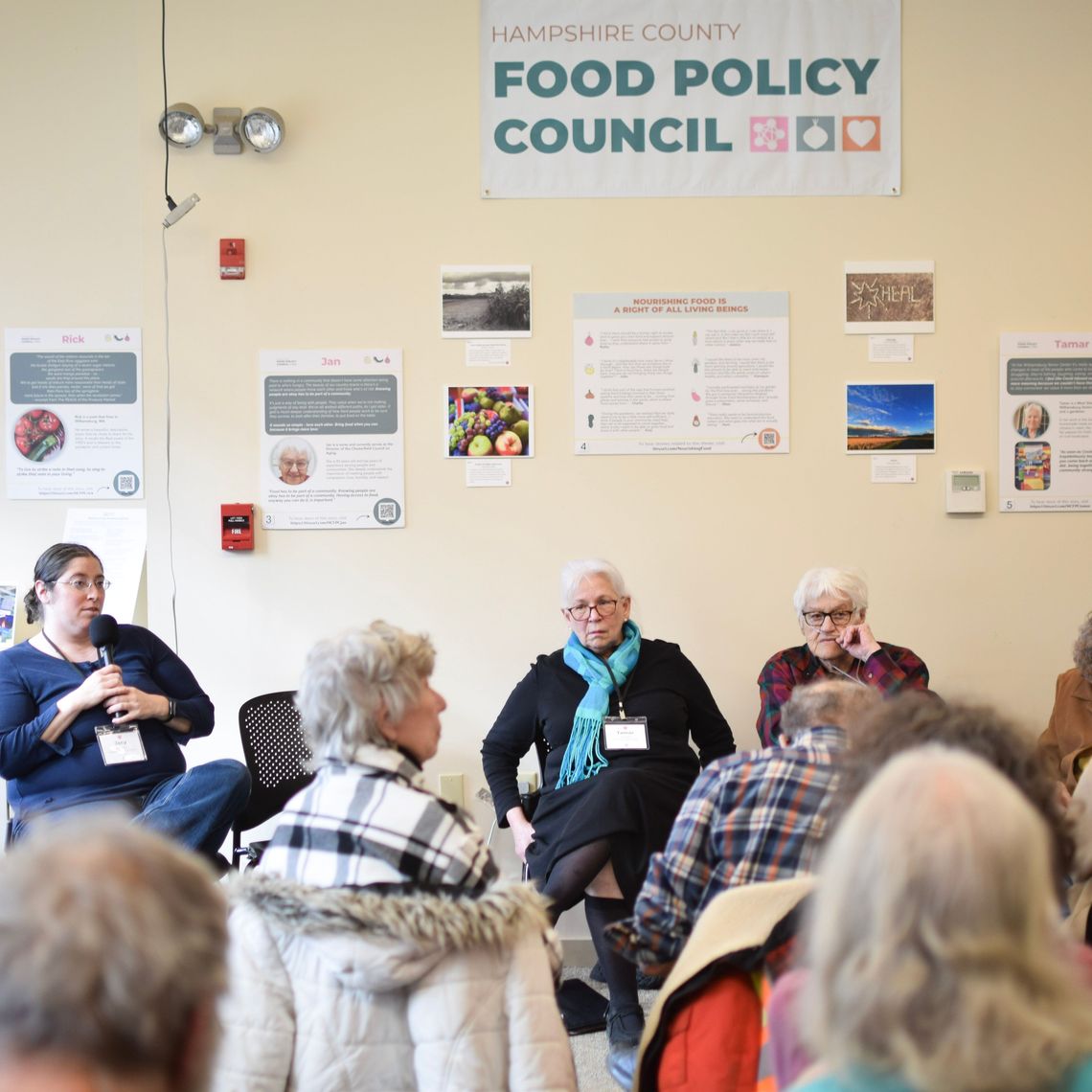
Together, Whitmore and Aoki envision a model where policy, storytelling, and lived experience combine to shape fairer systems for everyone. With the Community Power Fund, their project builds on the foundation of deep community engagement and story collection to pivot toward policy advocacy, using these stories as a tool for affecting policy change.
Revere Arabic Community: Training Immigrant Advocates
The Revere Arabic Community (RAC) is creating a platform for immigrant-led policy change in Revere. Through Project Bread’s Community Power Fund, RAC will enhance its Immigrant Family Support and Food Distribution Program to better meet the needs of immigrant families in Revere. The project focuses on building immigrant leadership, improving access to food, and creating long-term community solutions.
RAC is recruiting 10–15 immigrant residents to join a leadership group that will receive training in “advocacy, public speaking, and community organizing,” explained Asmaa Aboufouda, founder and president of RAC. In addition, RAC will host food access events, such as SNAP registration and awareness sessions, listening sessions to understand community priorities, and a public forum with city and state leaders to share recommendations.
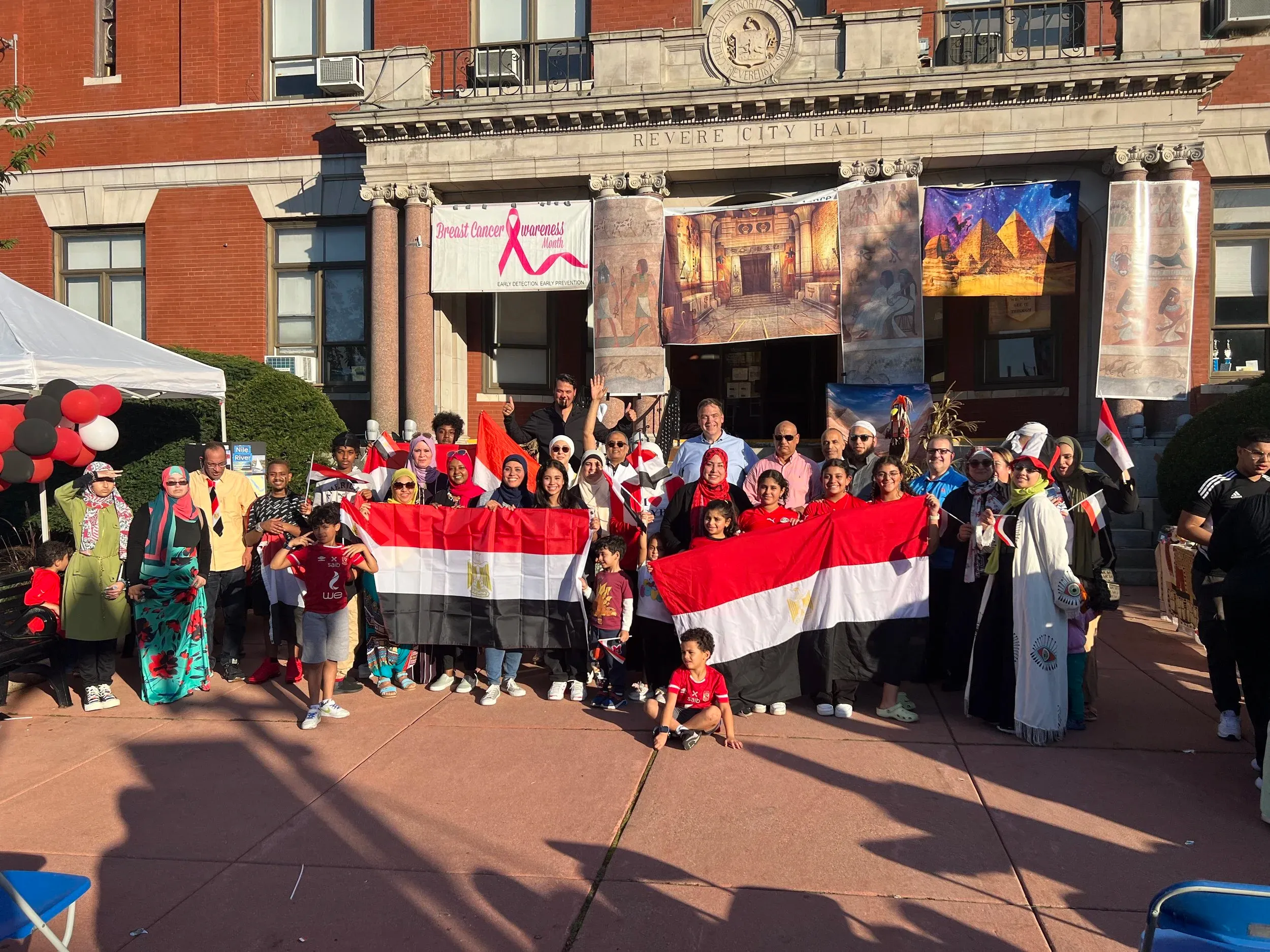
“These activities help families learn about available food programs, build confidence in speaking up for their needs, and strengthen partnerships between community groups and local agencies,” Aboufouda said. Over time, RAC aims to form a permanent immigrant-led advisory group that will continue advocating for culturally inclusive food programs and policies that reduce food insecurity across Massachusetts.
Aboufouda emphasizes the broader impact of the work: immigrant families not only receive food today but also have the power to shape a more equitable food system for the future. For RAC, sustainable community power means that the people most affected by hunger are empowering immigrant families to advocate for themselves, make decisions that affect their community, and shape policies that reflect their needs and values.
Through leadership development, culturally responsive programming, and advocacy training, RAC is helping ensure that immigrant voices are central to Massachusetts’ food justice movement and that families have the tools and confidence to create lasting change.
Build the Power to End Hunger
Each of the five grantees is demonstrating that when communities lead, systems can be transformed. Together, they are building the foundation for a Massachusetts where everyone has reliable access to nutritious, culturally relevant food and the power to shape the future of food security.
The Make Hunger History Coalition is investing resources to build the foundation for a food-secure future where no one has to worry where their next meal is coming from.